Weblog van Spruit
Goal in life: Create order, think lateral.
Monday, March 15, 2010
The direct link that you used is deprecated. This weblog was moved to WordPress.
Both new and old posts can be read as usual on www.ariebaris.com. This page is no longer updated.
Update your favorites!Labels: WordPress
comments []
Sunday, February 21, 2010
Earth ship computer
Internet is becoming more and more the ship computer of star ship Earth, because it fulfills more and more information needs. Here are two definitions of data and information (see merriam-webster).
Data: factual information (as measurements or statistics) used as a basis for reasoning, discussion, or calculation.
Information: the communication or reception of knowledge or intelligence.
So data plus some work makes information. The Internet contains masses of data, or basic facts, that can be transformed to useful information by aggregating and combining them. The available data on the Internet is also increasing steeply and the techniques for aggregating and combining this data into meaningful information are improving. Therefore, Internet will have more capacity for reasoning, knowledge and intelligence. This is, in my eyes, the biggest forte of the Internet. It is even very disaster tolerant, because the data is dispersed over the whole planet. "I don't know" cannot be used as an excuse anymore.
An example are comparison sites where you can compare all sorts of products from insurances to computer parts. Very useful information, especially when the products are reviewed by customers. A not so nice example is pleaserobme.com. It shows which Tweets are not at home. This makes clear, again, that we have to be careful with the data we provide on the Internet, because also bad things can be done with the information that is inferred from it.
So which data is coming available on the Internet and how can we make useful or malignant information out of it?
Data examples:
Whereabouts of people, cars, commodities, telephones, computers.
Product information like specs, sales, prices.
Legacy data that is digitized, like scans from governance archives.
Behavioral statistics like number of people online, where from, how long, doing what.
Encyclopedic information like Wikipedia.
Personal data like e-mail address, home page, books bought (person attributes) and connections in social networks, group memberships (relationships).
Information examples:
Whereabouts of people that bought a certain book.
A summary of the sub culture that someone lives in.
Common factors of any group of Internet users.
Download statistics of songs.
Health of people living in an area.
The information potential of the Internet has since long been recognized. Even though, I expect to see a lot of new ways the Internet will provide information.Labels: data, information, internet
comments []
Saturday, February 13, 2010
Specification of IT solutions
 Some work is done so routinely that you hardly think about how it is done. Here is one example. Some work is done so routinely that you hardly think about how it is done. Here is one example.
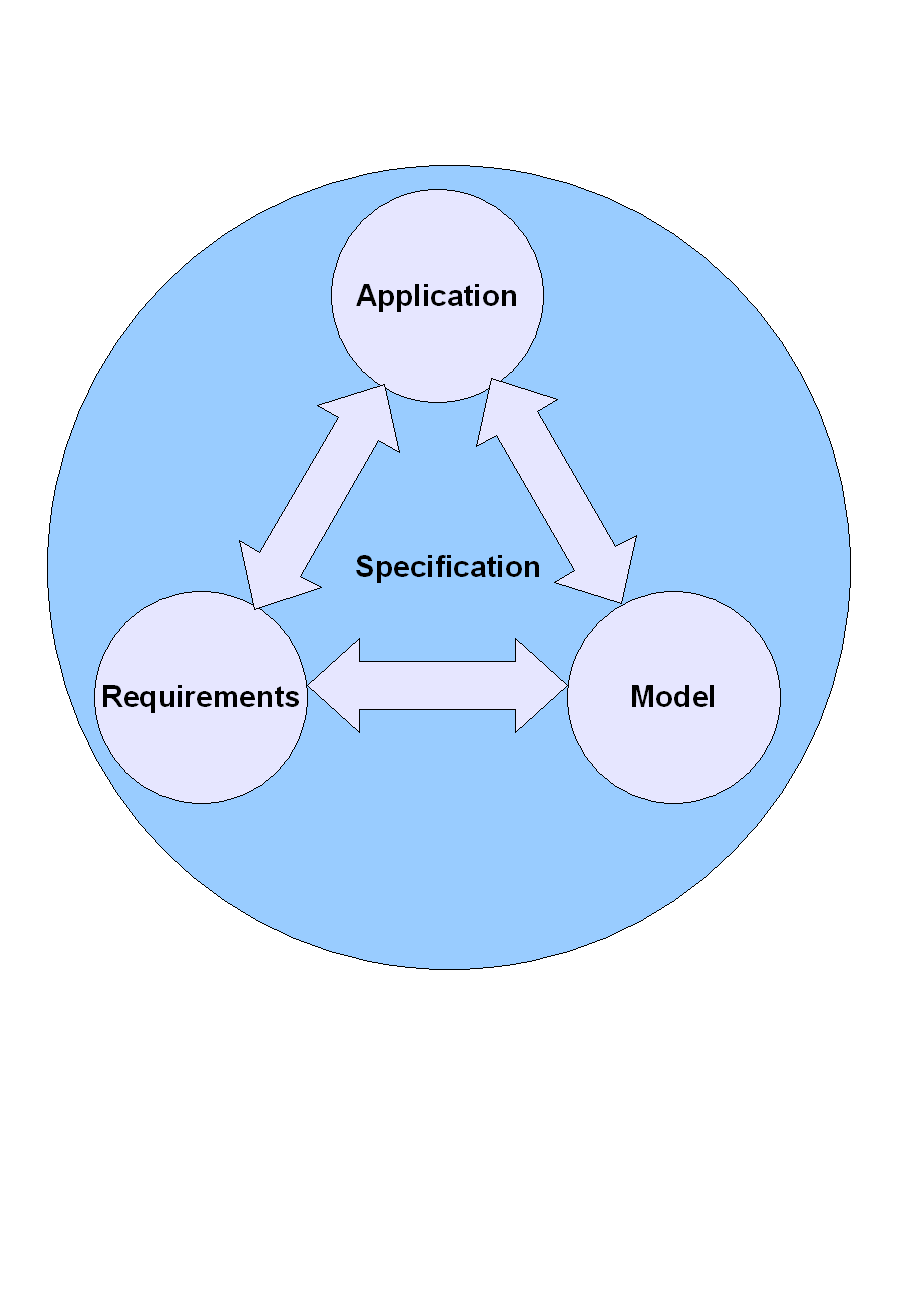
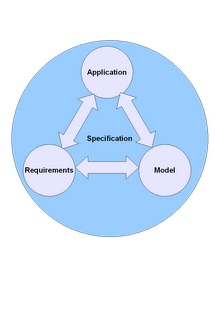
As depicted in the model above the specification of an IT system or parts thereof can be viewed conceptually as an interplay between three components that all influence each other.
Requirements
As usual there need to be requirements. These correspond to what the demands on the IT system are in the broadest sense. Functional and non functional. Normally the intended end users or representing business party will supply these and they tell WHAT the system should do.
Model
Next there needs to be some kind of model or architecture. It is not smart to start building "ins Blaue hinein". We need rules to the game, but I am not getting into the "why do we need architecture" discussion here. More on the model part in a next blog, I have a picture of that as well. The model tells HOW the system does it.
Application
Finally both of the above lead to an IT application or parts thereof: programming. The REAL THING.
For example we may need to set up authorization for a document management system. There will be requirements like, there exist these groups of documents that are defined by these criteria and group A needs to be visible by these users defined by another set of criteria. These demands will need to be mapped on the authorization model of the document management system. For example, use security groups to group the documents vs use accounts to group the documents. Finally this will lead to actual authorization set up by populating the model according to the requirements, create security groups A, B and C, link them to roles X, Y and Z, appoint roles to users and modify programming so that documents of criteria 1, 2 and 3 end up in the correct security group.
In this interplay the three parts influence each other. For example, some requirements may not be met by the current authorization model, so we need to change one of the two. Requirements and the model dictate what the application will look like.Labels: IT solution, specification
comments []
Friday, January 15, 2010
Great tutorial to print from an Ubuntu pc in your network to a printer connected to a Windows pc. Most tutorials I found are the other way around, where the printer is hooked up to the Ubuntu pc.
It does not mention that you need to install print services for Unix on your Windows pc. It does not work without. Go to Start - Configuration Screen - Software and click on the left on adding Windows components. Choose services for files and printers and activate the one for Unix.
I am still trying to find out how to do this without using the ip address of the Windows machine.Labels: printen, printing
comments []
Sunday, January 10, 2010
Huishoudboekje anno 2010
Budgetcoach in B-programma op de Nederlandse televisie: "Weet je wat jouw probleem is, je hebt geen overzicht van je vaste lasten".
JAWEL! Met GnuCash kun je het allemaal bijhouden. Geweldig programma, en gratis. Hoeveel er standaard binnen komt en weer uit lekt hoeven ze dan niet meer te vragen, want dan krijgen ze meteen een document van twaalf vellen waar het allemaal in staat. Of een pdf-je, als dat makkelijker is :-)
Toch best wel noodzakelijk als je huishouden op een kleine B.V. begint te lijken, met een stuk of tien rekeningen en tig vaste kostenposten. Dit alles mede veroorzaakt door het alsmaar toenemende aantal huisgenoten. Ik schat zo in dat dat na Suzan, Isaac, Arie en Ted nu wel stabiel is, dus een mooi moment om eens te proberen grip op de zaak te krijgen. Je kunt alle vaste inkomsten en uitgaven voor het hele jaar er alvast in zetten. Dan zie je meteen hoe je er aan het eind van het jaar voor staat.Labels: gnucash
comments []
Friday, December 25, 2009
Airplane wing
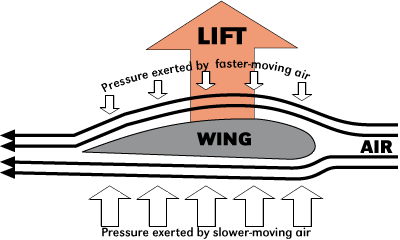
Another parable that comes to mind is the one of an airplane wing. The wing creates a vacuum above itself because it pushes the air away with its forward speed. The wing and the air above it fall into the vacuum which creates the upward lift on the wing. But I am not a physician, check the Bernoulli Principle.
Is something like this happening with the earth (the wing) and the space time continuum (the air)? What creates the space time density difference (vacuum) around planets?Labels: space time
comments []
Related to the previous post, see also Erik Verlinde's Wikipedia. I am still trying to find out what his idea is exactly. He talks about "a difference in concentration of information". And "You can compare this to pressure of gas." This sounds much like the parable I am looking for!Labels: erik verlinde, space time
comments []
Space time continuum in 3D?
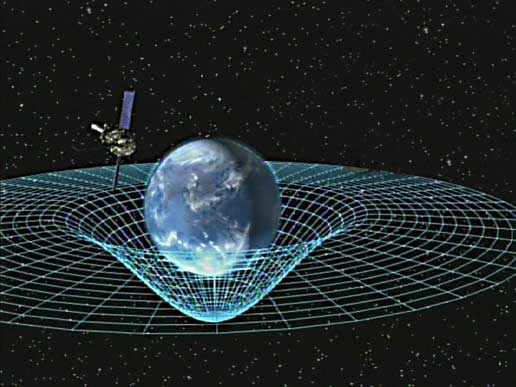
On the web there are a lot of images of the space time continuum according to the rubber sheet and ball parable. Like this one.
Since the world, and the universe, is not flat I have great trouble getting my head around curvature of space time when looking at it this way.
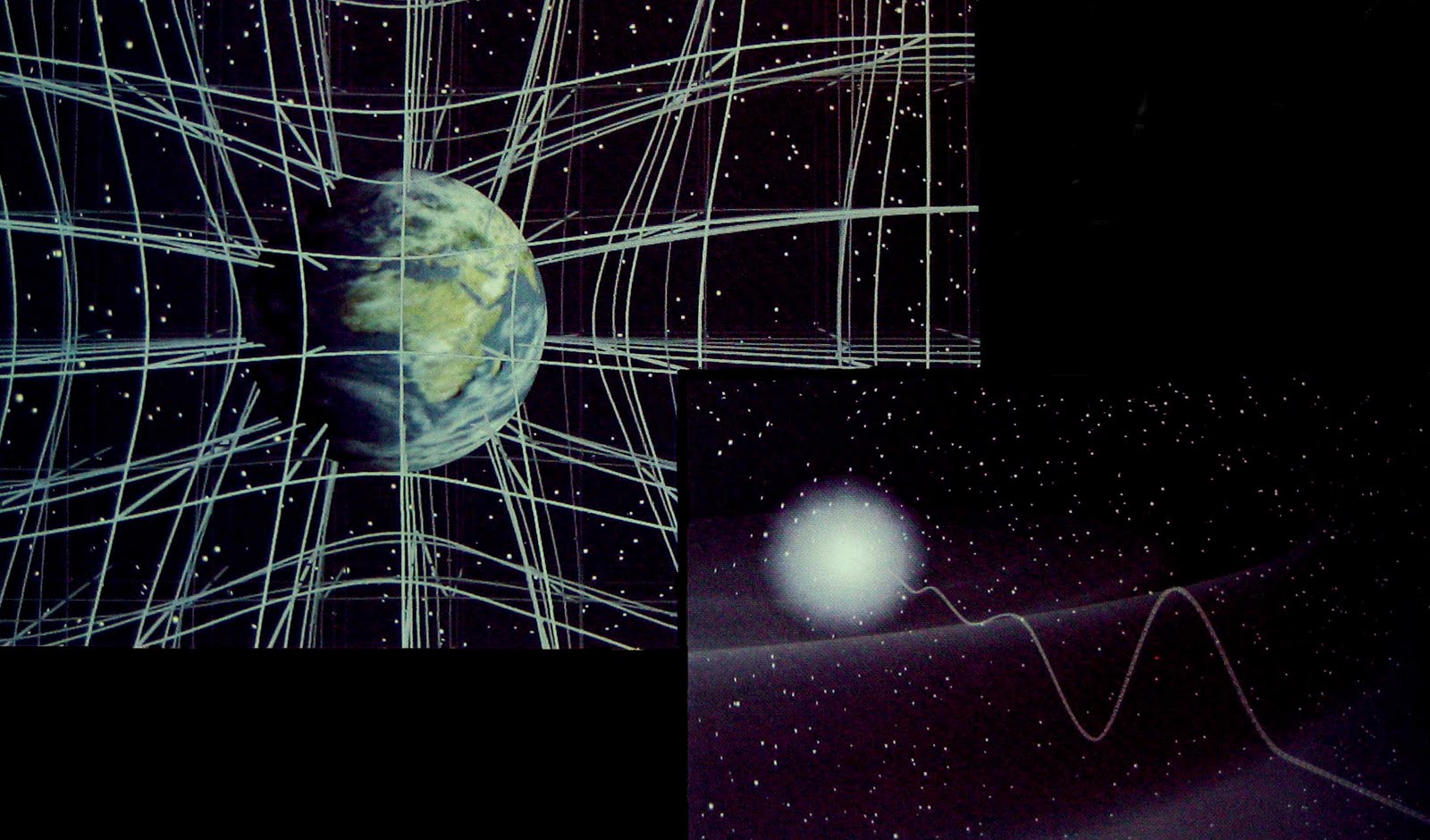
Fortunately I found this image, which is more like I imagine it. Thanks Vast.
Does anyone else have a good 3D depiction of the curvature of space time?
Space time is probably not curved, but stretched or varying in density, which causes light and time to pass through it in a curved way. The first image would push anything moving along the lines of space time, like light, away from the object. Whilst, according to the theories I have seen it should be attracted by the object and following its course in a different direction than before reaching the object.
I am looking for a parable with liquid or gas in which an object changes the density of the liquid or gas. A bit like twirling your finger around under water (not at the surface). This seems to be sort of what a rapidly spinning black hole does with space time.
The rubber sheet and ball parable is wrong and confusing.Labels: space time
comments []
Tuesday, December 22, 2009
Zie hier.
comments []
Sunday, December 20, 2009
Sneeuwpret!
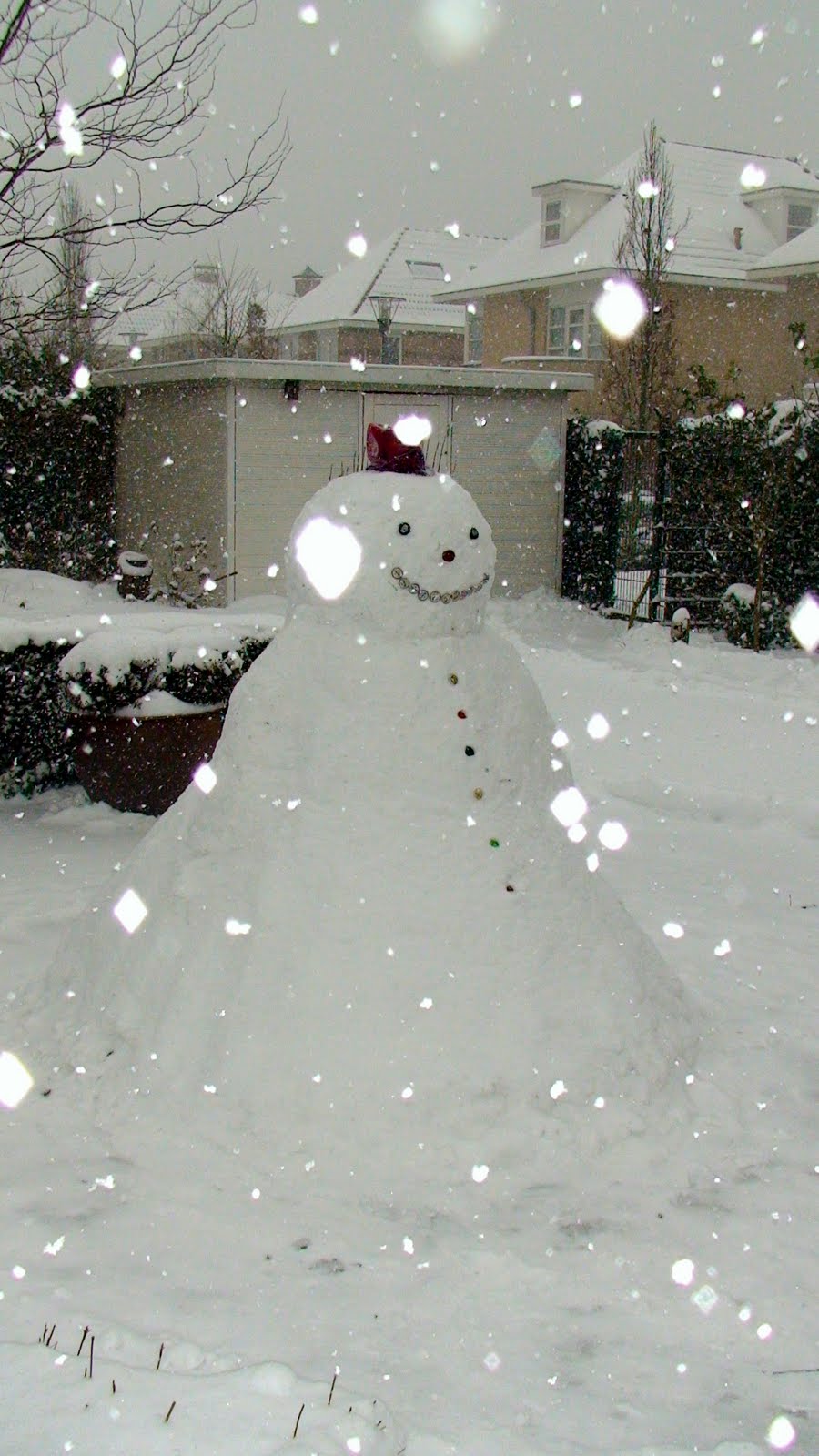
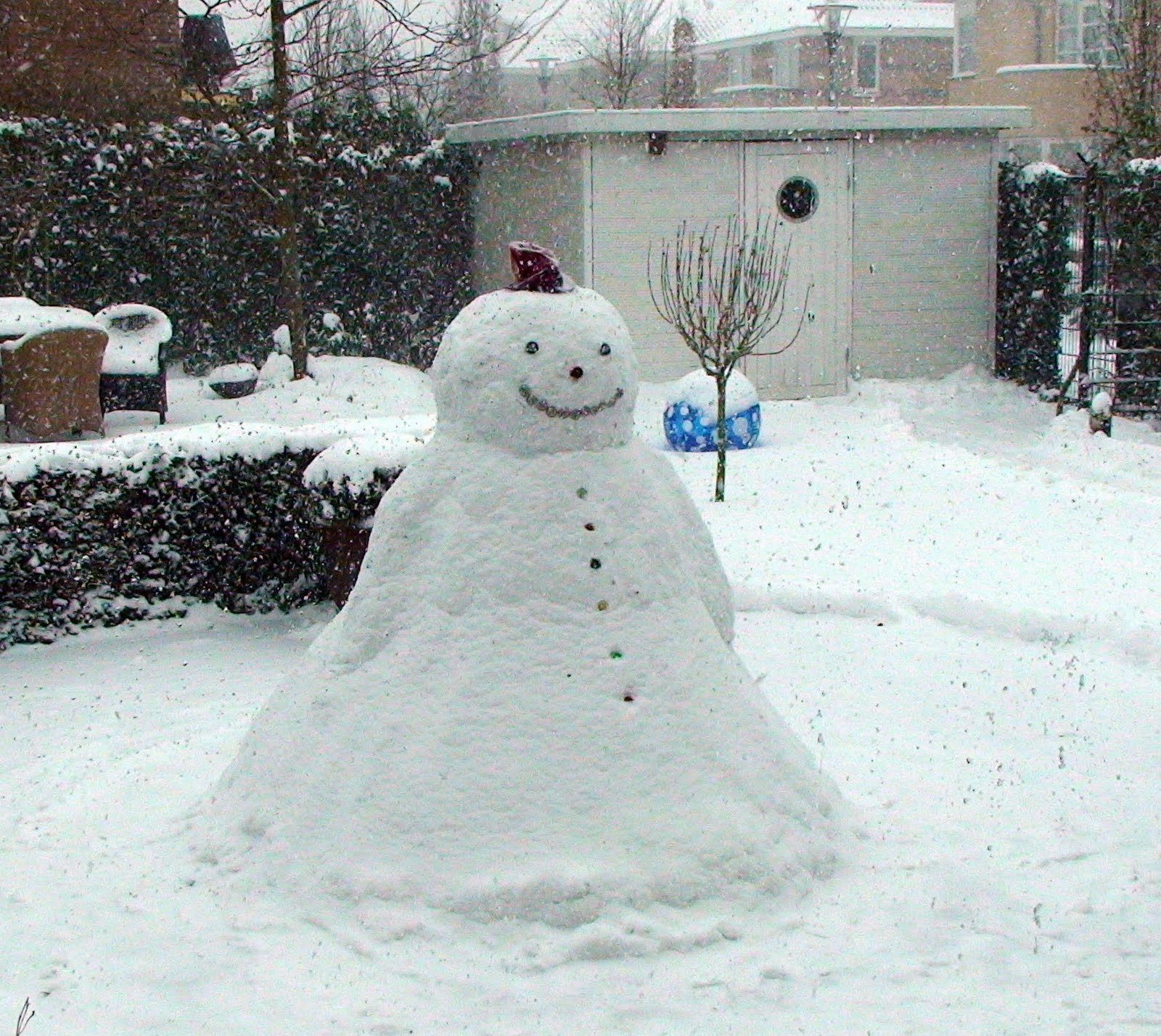
Seppel de sneeuwpop, knap staaltje sneeuwsculptuur van Paksoi en mij. Al zeggen we het zelf :-) Arie en Ted moeten nog wakker worden. We zijn benieuwd hoe ze reageren.
Labels: sneeuwpop
comments []
Tuesday, December 15, 2009
Zo cool om dit te zien gebeuren. Ik was eerst met dit idee!
comments []
Monday, December 14, 2009
Don't trust the Internet
Internet, very unsecure. I reverted to sending all my e-mails on cd via snail mail.Labels: absurdism
comments []
|